
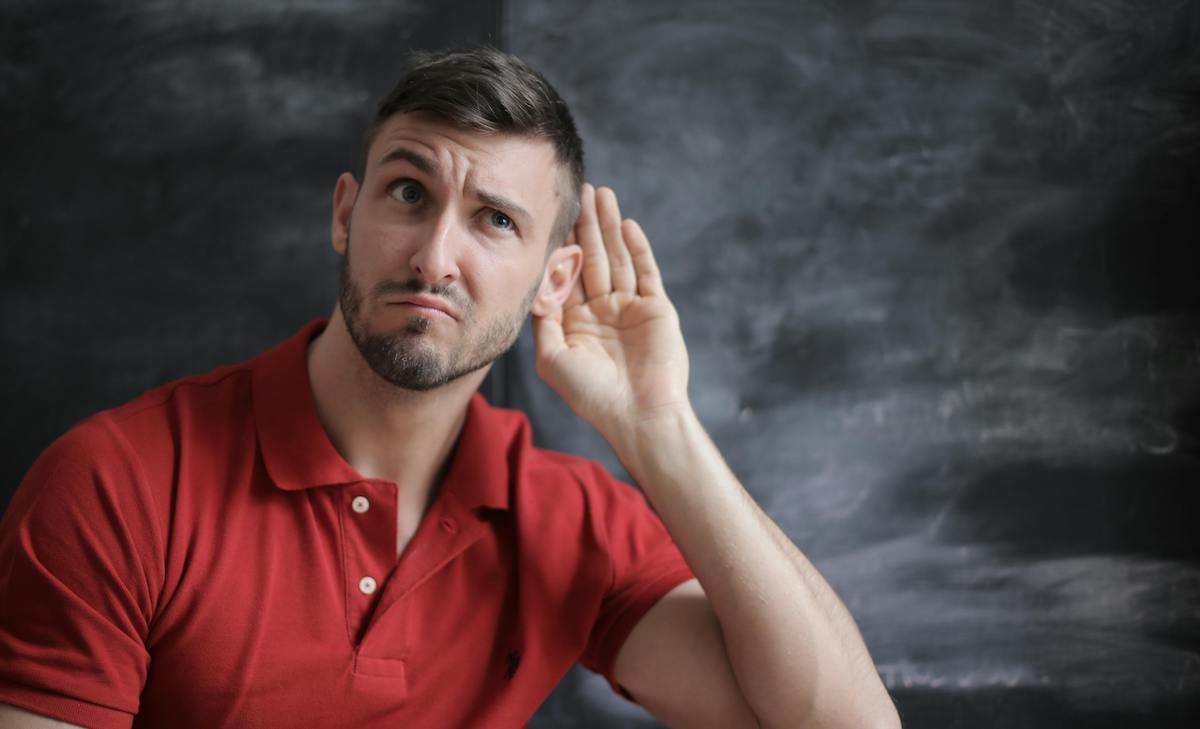
Why do people start their answers with “look” and “listen”? Dr. Ray talks about a communication habit he notices in interviewees and sometimes in parents, and wonders what is behind it.
“Listen” and “Look”
I have noticed that when people are asked a question, and this is particularly true of pundits, perhaps political figures, there is a communicative habit that’s ugly. I think it’s easily done even in normal conversation, and the implications of it are not good. What am I referring to? Let’s say you ask me a question and you say, “Ray, I want to get your opinion on my 17-year-old daughter.” And I start my answer with, “Listen.” Now that’s very commanding, isn’t it? That struck me, because I’ve heard an awful lot of interviewees begin their answer that way. Or a parallel word: “Look.” In other words, I am dictating to you to pay attention.
I don’t know why this is so common. One of my explanations is that we tend, by osmosis, to pick up on speaking styles. The word “well” is used constantly to answer any question. I would say at least 80 percent of the time, when someone is being interviewed on radio or TV about a subject they have experience in, they’ll start out with “Well.” But “look” and “listen” are particularly pushy. In other words, “Look and listen.” They imply, “You need to pay attention to me.”
I think it’s as though, if I don’t say “listen,” they’re not going to listen. Or, I don’t know what I want them to look at. Apparently, look at my reasoning. You could say “Think,” or “Pay attention,” or “Watch out.” All of which say, “I’m going to say something really important to you now, and you need to focus on it.”
“Well, being a shrink”
Now, some might say, “Kind of being a little picky here about language, aren’t you, Ray?” Well, being a shrink, what you’ve got to do is listen to language. That’s the coin of the realm in therapy or counseling. Trying to understand somebody, you’ve got to listen to the words they use. You’ve got to listen to how they use the words. You’ve got to, between the lines, try to figure out what they’re saying. You’ve got to connect this sentence to a sentence they said 12 minutes ago. You have to hyper-focus on the way they phrase things.
It’s very hard for me. My wife sometimes will be watching something on TV, and she’ll look at me, because she’ll know I’m just getting ready to comment on this. She’ll say, “Ray,” and I go, “Yeah, okay, okay, okay.”
There’s a certain emphatic pronunciation to both of those words. It’s not “please look” or “would you listen?” No, no, no, it’s “listen,” and I can’t help wondering what the motive is for using those words. Is it just a habit, just a way of talking? Is it to fill up a little bit of time until you formulate the thought you were going to say? Or is it something more? Is it stressing that my opinion needs to be taken into account here, because it’s very accurate, formidable, and something you should seriously consider? I don’t know. I just thought about that. I made a little note here in my book: comment on starting answers with “look” and “listen.”
Sometimes parents do that. Lecturers, you notice that? Kid does something, and we want to try to straighten out their thinking on it. “Now listen to me.” We do that. “You look here, young man.” I guess those are kind of variety words, and you can use them in a bunch of contexts. But I’ve got to take a break here. So when I get back, I hope you’ll listen.
Dr. Ray has plenty more on how we talk to each other in How to Get Along with Almost Everybody.
Transcript of Dr. Ray’s audio blog, lightly edited for reading.